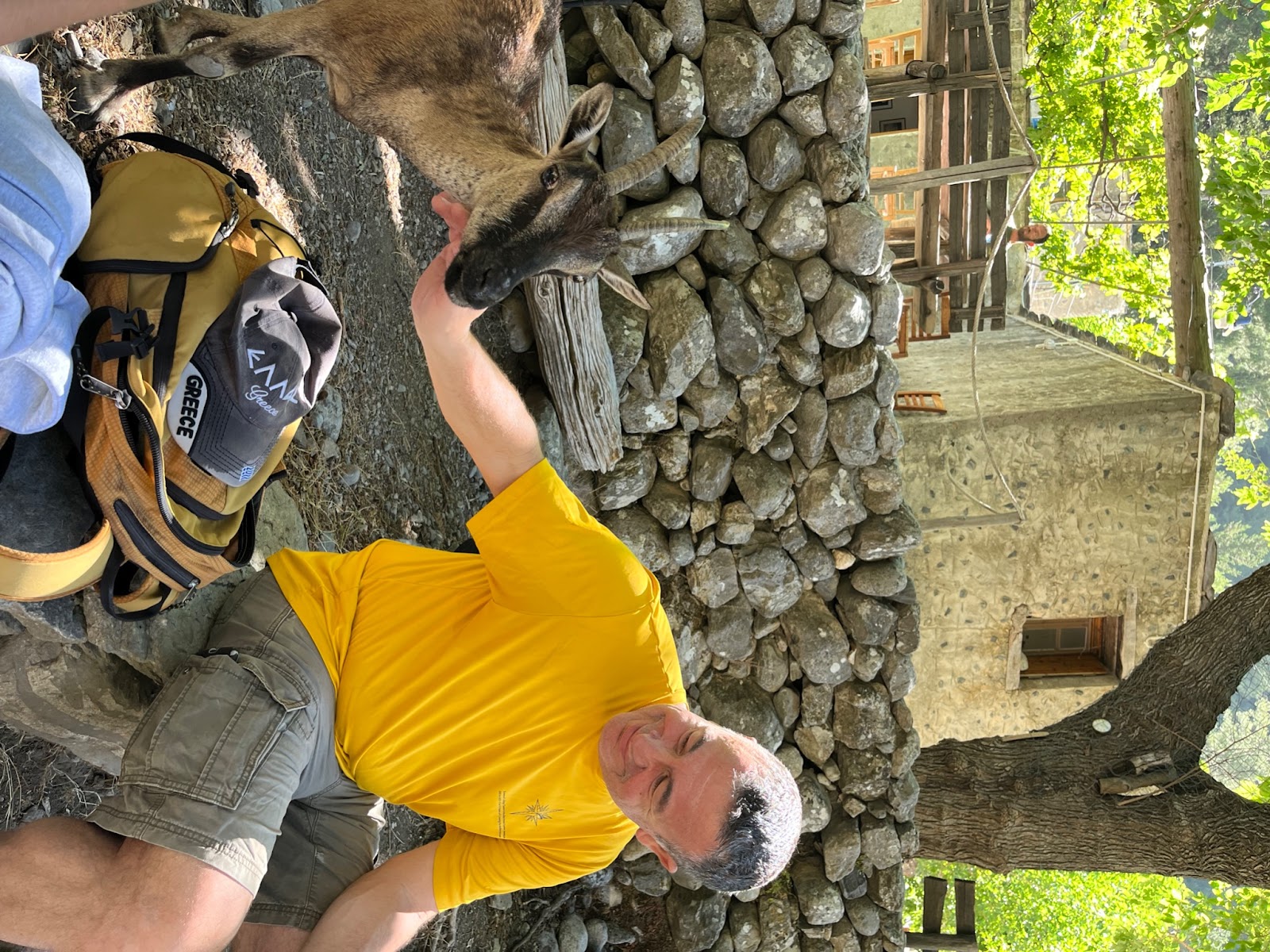
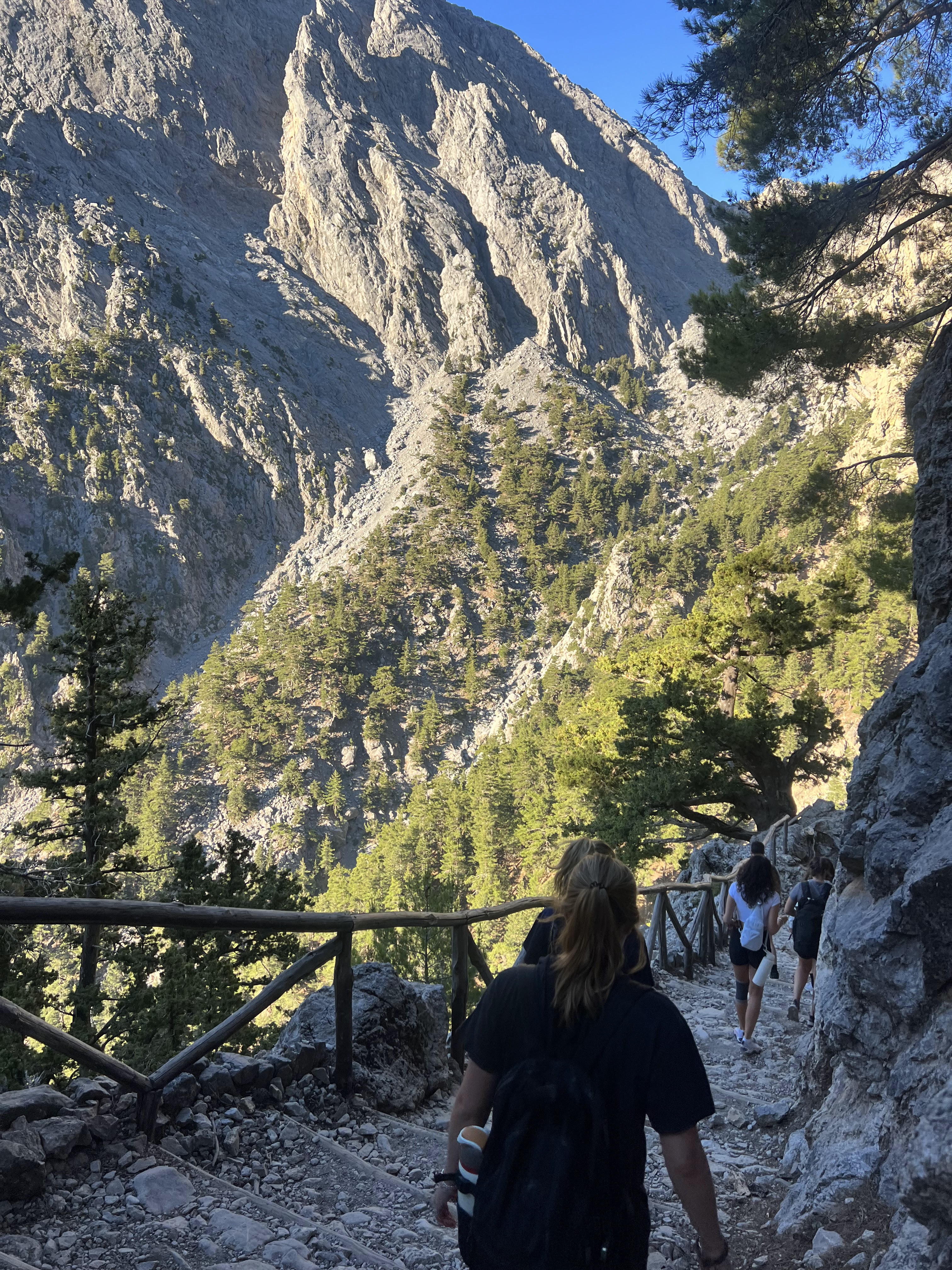
I recently had the opportunity to join Professor Vamvakas and 11 of my peers on a month-long study abroad program to Crete, Greece. While staying in the village of Alikianos in rural western Crete, our group was invited to the community's memorial service for 42 Greek villagers who were summarily executed by the Nazis in retribution for killing four German occupiers in 1941. We were graciously welcomed and provided with English translations of the service. In this blog, I will briefly describe the tragedy suffered by the people of Alikianos, the service, and the broader lessons I learned about society and memory.

For those cemeteries, the invaders demanded revenge. On the morning of June 2nd, the soldiers surrounded the village and dragged every family into the courtyard of the Church of the Holy Cross. There, they selected 40 men and captured two women who attempted to escape before forcing them to dig a mass grave next to the church. When it was complete, they stripped the villagers of their valuables and planted a machine gun atop the steps of the church. For those 42 people, time stopped forever.

I was struck by the role of the children in the ceremony. After songs and statements by musicians and local leaders, the elementary school students performed a play. The children emphasized that "We did not live through it, but we carry it with us. Because memory is not the past. It is a responsibility," adding that, "Evil does not always arrive shouting. That is why we stand together. So that memory never fades."
Watching the ceremony, I realized that the memorial was not simply about preserving the past. It was about renewing the community in the present. It was in this moment that I was struck by the importance of collective memory and the sheer lack of it in my own community at home. For Alikianos, this traumatic memory is also a point of pride; they fought back, and they preserved their honor. More importantly, it acts as a signifier of who they are and connects them to the place they call home and to the people in their community. The children were not learning history as a collection of dates or facts; they were inheriting a shared identity and a responsibility to carry it forward. The annual act of remembrance transformed memory into something living, strengthening the bonds between generations and reinforcing a sense of common purpose.